


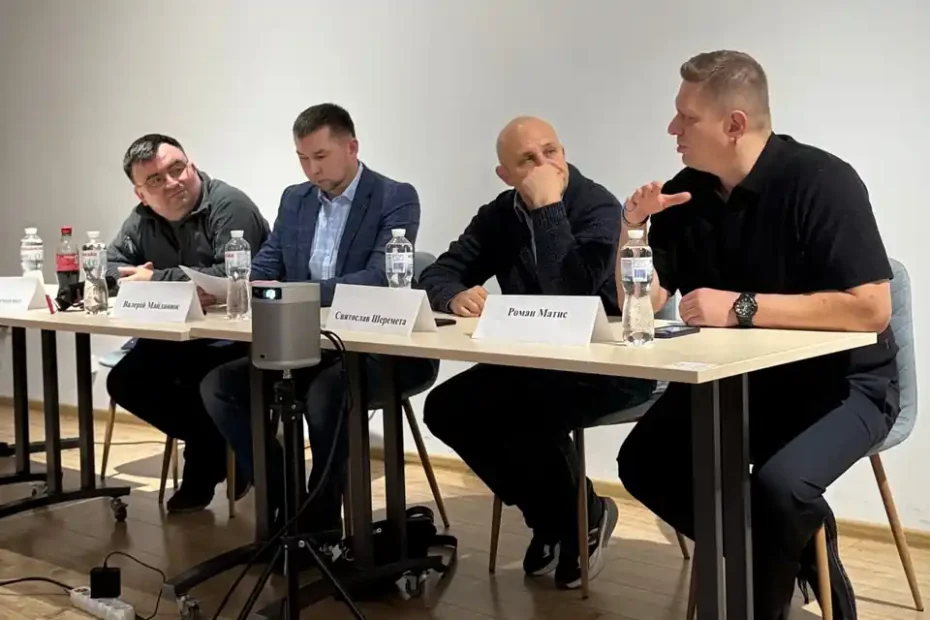
The deterioration of Ukrainian-Polish relations in 2026 coincided with Ukraine’s EU accession talks in the most expensive clusters: agriculture and regional funds. Roman Matys, President of the International Investment Office, proposes splitting the disputes into three separate tracks: memory, the economy and security.
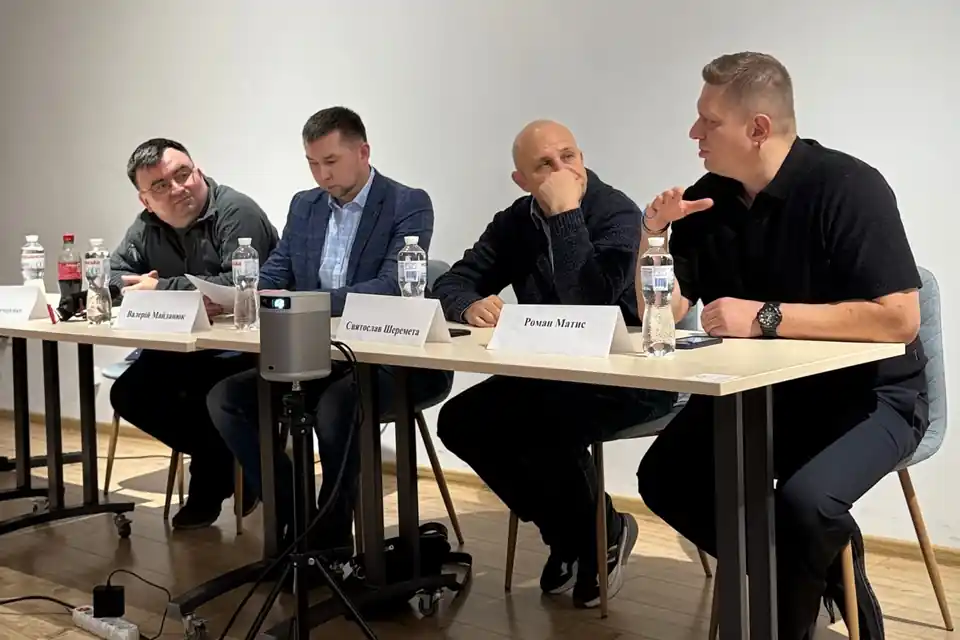
Roman Matys presented these points at the expert discussion “The Right to One’s Own Memory: National Identity, Dialogue with Neighbours and the Russian Factor”, organised by the Ukrainian Security Club and the NGO “Foundation for the Promotion of Democracy”. The main topic was the difficult chapters of relations with Poland. The panel included Yuriy Honcharenko (Infolight), Sviatoslav Sheremeta, Mykola Posivnych and Taras Rad, with Valery Maidaniuk as moderator. The discussion was supported by the Hanns Seidel Foundation Ukraine.
I have worked in investment for more than twenty-five years, and I am used to looking at any crisis through two things: money and the calendar. The Ukrainian-Polish quarrel of 2026 reads very well that way.
Why Ukrainian-Polish relations deteriorated in 2026
The dispute over the Volhynia tragedy is old and real. The Sejm recognised those events as genocide back in 2016, and Polish politicians have been repeating the line “you will not enter Europe with Bandera” since 2010. For years, though, it all stayed at the level of diplomatic notes and historians’ statements. Presidents did not take decorations away from each other.
In 2026 that happened. In May a decree appeared naming a unit after the “Heroes of the UPA”. On 19 June Karol Nawrocki stripped Volodymyr Zelensky of the Order of the White Eagle and declared that Poland would not let into the EU those who do not renounce the “cult of totalitarianism”. Now look at another line of the same calendar. In September Warsaw called agriculture the hardest issue in the negotiations on our accession. In early October the Financial Times reported that the European Commission was proposing to restrict Ukraine’s agricultural sector even after accession. A few days ago it emerged that Poland’s demands had been taken into account in the positions on the fourth and fifth clusters, that is energy, transport, agriculture and regional funds.
The economy did not invent the conflict over memory, but it decides when the conflict gets taken out of the drawer. It is much easier to explain your position to voters in the language of history than in the language of the budget.
Trade, farm subsidies and exhumations: what the numbers say
I will start with trade, and I will use Polish statistics so that nobody can accuse me of bias. According to GUS, in 2025 Poland sold Ukraine goods worth about €13.4 billion and bought €4.6 billion worth from us. Poland’s surplus, by its own Ministry of Development’s estimate, was €8.7 billion. Ukraine is the seventh-largest buyer of Polish goods. For Polish business we are a market it does not want to lose.
Now about fear. The EU spends about €55 billion a year on farm subsidies, and much of Poland’s anxiety is about exactly that. The Polish farmer is afraid of our grain, and the Polish budget is afraid of ceasing to be the main recipient of European money. Both fears are understandable. But Poland has walked this road itself: after its accession in 2004, payments to its farmers were phased in over almost ten years, and German and French farmers feared Polish competition back then just as Polish farmers fear ours today. Deputy Prime Minister Taras Kachka has already said that Ukraine is ready for a transition period. We do not agree to permanent restrictions, and I think that is right.
There is also money that gets talked about less, even though it is bigger than the farm money. Over twenty years of membership Poland received €161.6 billion net from the EU, most of it through the cohesion funds. For 2021–2027 its allocation from those funds is €76 billion, the largest of any member. This money is divided according to how much poorer a region is than the EU average. Ukraine’s accession will lower that average, and Polish regions will statistically “get richer”, even though in reality nobody there will be any better off. According to the Council of the EU’s estimate, Poland could turn from the largest net recipient into a net contributor. That is the real nerve of Polish anxiety. So two players keep the conflict going: President Nawrocki hits on memory in public, while Donald Tusk’s government, which negotiates the clusters and funds, quietly defends the money.
Even here the numbers are calmer than the headlines. In June 2026 the Brussels-based think tank CEPS calculated that Ukraine would receive no more than €4.8 billion a year from the cohesion funds. Poland in an enlarged EU would get about €8.79 billion, almost twice as much. Spain and Portugal also lost some money after Poland joined. Nobody demanded that Warsaw settle historical accounts back then.
And about memory, because here too you can count. In 2025–2026 Ukraine opened six sites to Polish search teams: Puzhnyky, Zboishcha in Lviv, Uhly, Ostrivky, Volia Ostrovetska and Huta Peniatska. The Ministry of Culture said that every permit the sides had agreed on had been issued. In the same period Poland opened two sites to Ukrainian search teams. The permit for Łasków took more than a year, and when the expedition finally began work it found the remains of more than forty Ukrainians killed in 1944. The head of the expedition, Sviatoslav Sheremeta, was then banned from entering the Schengen area. Of the ten Ukrainian monuments and graves in Poland that have been vandalised since 2014, one has been fully restored.
I cite these figures without any wish to shame anyone. Reciprocity has to work both ways, otherwise it stops being reciprocity.
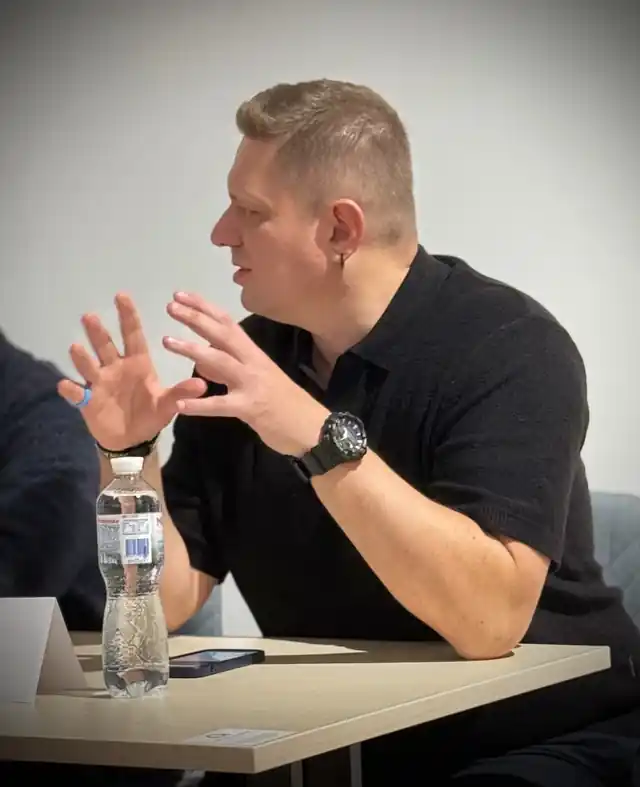
Three tracks: how to separate memory, the economy and security
Our main mistake, and Poland’s too, is that we have piled everything onto one table. Graves, grain and weapons ended up in a single conversation, and now every dispute blocks the rest. I propose splitting them into three separate tracks.
The first track: leave memory to the experts. The Ukrainian-Polish working group under the two culture ministries is already working and has shown results over the past two years. Its work should be anchored in an intergovernmental agreement with a fixed deadline for answering every request, say ninety days. Then a search permit will not depend on what a president said the day before. The procedure should be mirrored, the expeditions joint, as in Uhly, and DNA identification the same for the victims of Puzhnyky and of Łasków. Historians need a joint commission with a mandate covering the whole period from 1918 to 1947, and its conclusions should not become a condition for anything. A family’s right to bury its own is the same for a Pole and a Ukrainian.
The second track: settle the economy in Brussels. Disputes over markets should go through the European Commission, not through blockades of border crossings. Transition periods are acceptable, permanent restrictions are not. The Black Sea matters too: the National Bank of Ukraine estimates our loss of export revenue from the blockade of the ports in the second half of 2026 at $2.5 billion. Every tonne of grain that does not leave Odesa looks for a way west and ends up at the Polish border. A secure sea corridor protects the Polish farmer better than any embargo. And one more thing from my own experience. When we were building the “Lviv Region — Factory of Europe” strategy, I saw how a foreign investor who has put money into a region starts defending it in his own capital. Polish capital in Ukrainian industrial parks near the border and in reconstruction will turn every such investor into an advocate of good neighbourliness in Warsaw.
That is why Polish business should be actively drawn into the Ukrainian economy: industrial parks near the border, processing, logistics, energy and reconstruction. A Polish entrepreneur with assets in Ukraine becomes our lobbyist in Warsaw without any agreements or fees. He will go to his MP or minister himself and explain that the next scandal over history hits Polish jobs and taxes. Politicians listen to such people more closely than to diplomats. The state and local communities should offer Polish companies concrete sites, reconstruction projects and clear rules now, without waiting for the war to end.
The third track: do not touch security at all. Poland has provided our Defence Forces with €5 billion in aid and remains the main supply hub. No dispute about history or quotas should touch the logistics of weapons, air defence, equipment repair or intelligence sharing. The two governments can commit to this publicly, as a safeguard for the next scandal.
Russia does not need to invent anything in this story. It is enough for it to amplify the fears that already exist, and every quarrel between Kyiv and Warsaw works for Moscow better than any propaganda.
Poland wants to be Ukraine’s guide in Europe and the leader of the region. Quarrelling with us weakens its position in Brussels. Three separate tables allow Warsaw to defend its farmers, insist on the search for victims and still remain our main ally. For us they open a road to the EU on which memory does not become a bargaining chip.
And those who are counting sacks of grain at the border today should remember a simple thing. If Ukraine does not hold, the border with Russia will run along the Bug. And that is the best case.
Roman Matys is President of the International Investment Office, founder of the International Economic Forum in Lviv and author of the “Lviv Region — Factory of Europe” strategy. He has worked in investment attraction for more than 25 years.
In brief: questions and answers
The trigger was historical memory: a decree naming a unit after the “Heroes of the UPA” and Polish President Karol Nawrocki’s decision to strip Zelensky of the Order of the White Eagle. The escalation coincided with preparations for Ukraine’s EU accession talks in the agricultural cluster.
According to GUS, in 2025 Polish exports to Ukraine were about €13.4 billion, imports from Ukraine €4.6 billion, and Poland’s surplus €8.7 billion.
In 2004–2024 Poland received €161.6 billion net, and for 2021–2027 it has €76 billion in cohesion funds. According to CEPS, in an enlarged EU Poland would receive about €8.79 billion a year from these funds and Ukraine up to €4.8 billion.
In 2025–2026 Ukraine opened six sites to Polish search teams, and Poland opened two to Ukrainian teams: Jureczkowa and Łasków, where the remains of more than 40 murdered Ukrainians were found.
Splitting the disputes into three tracks: leaving memory to experts under an intergovernmental agreement, settling economic disputes through the European Commission with transition periods, and taking security cooperation out of reach of any bilateral dispute.
Sources
- GUS via Interia: Polish exports to Ukraine in 2025
- Polish Ministry of Development and Technology: trade balance with Ukraine
- Ukrainska Pravda: European Commission on agricultural restrictions (FT)
- LIGA.net: EU took Poland’s demands on clusters 4 and 5 into account
- European Pravda: Nawrocki on Ukraine’s EU accession
- LB.ua: Ministry of Culture on exhumation permits
- LVIV.MEDIA: the expedition in Łasków
- Interfax-Ukraine: entry ban for Sviatoslav Sheremeta
- Radio Svoboda: one monument out of ten restored
- TVP Polonia: €161.6 billion net over 20 years of Polish membership
- Money.pl: €76 billion in cohesion funds for Poland
- IP Quarterly: Poland could become a net contributor
- CEPS: the impact of enlargement on the EU budget, 2026