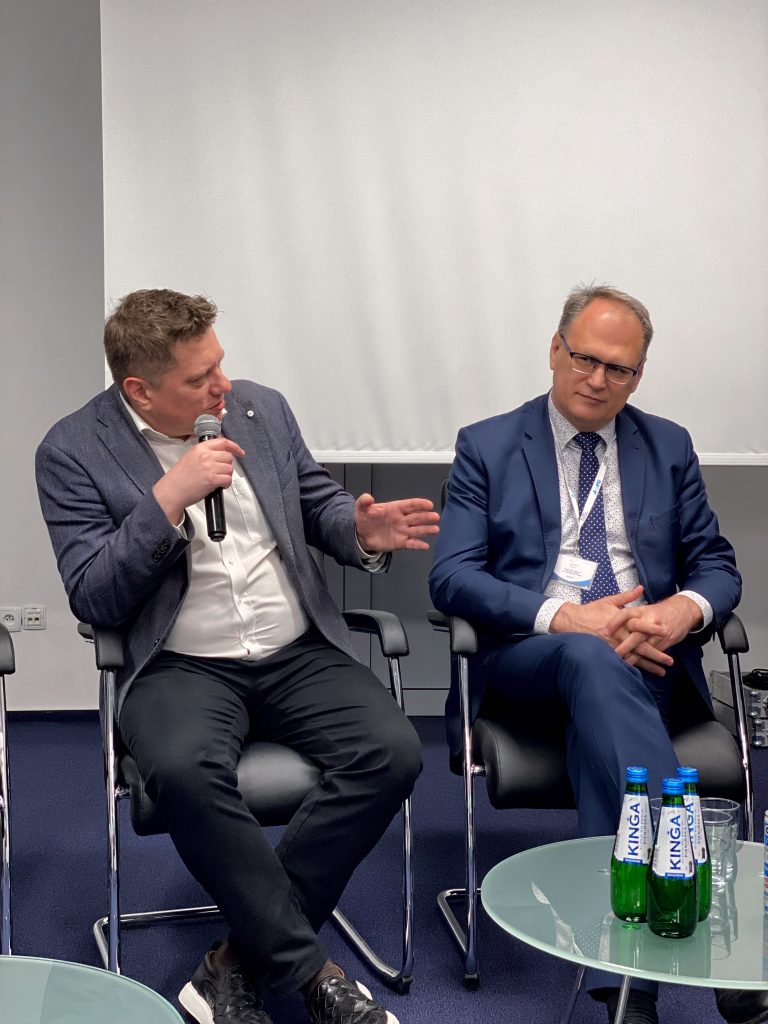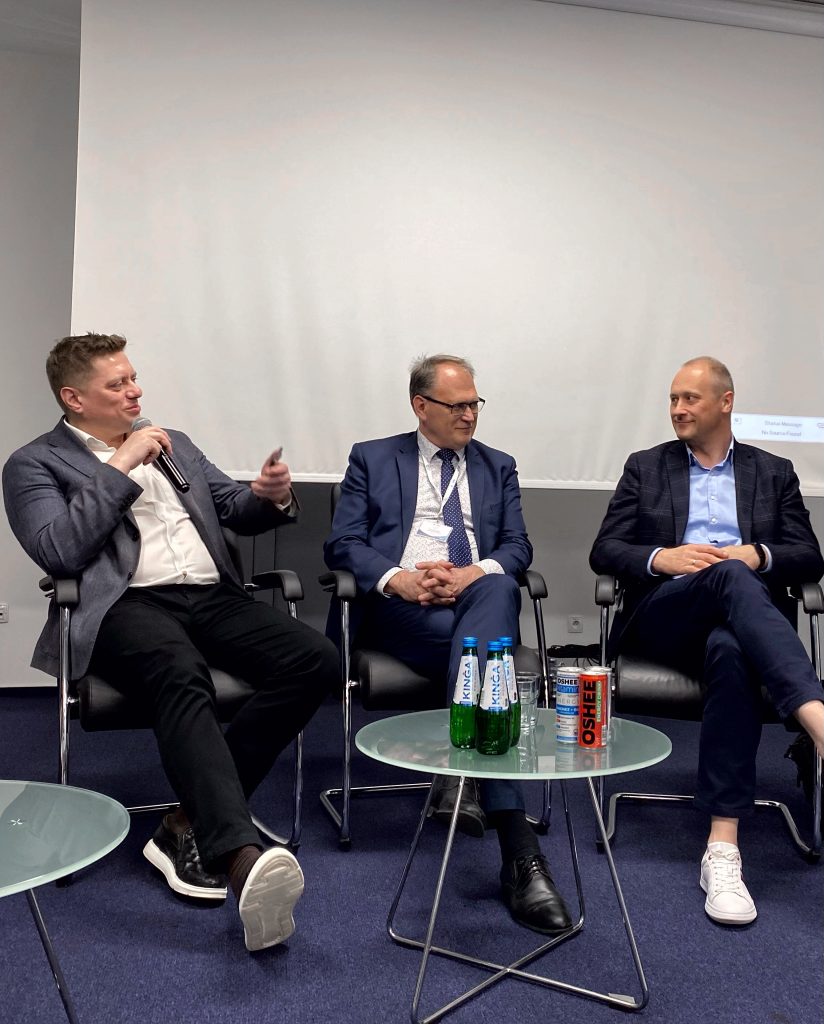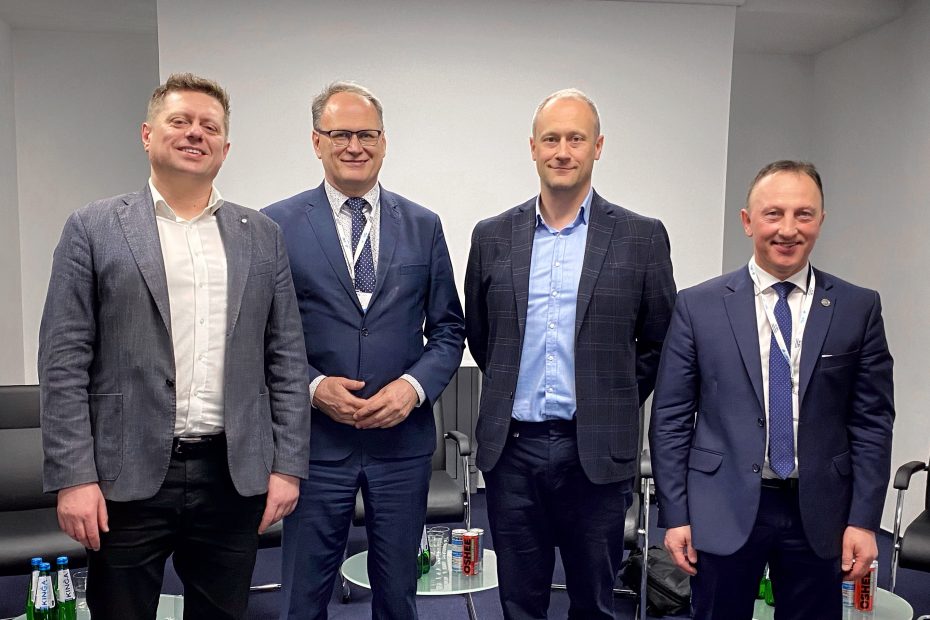
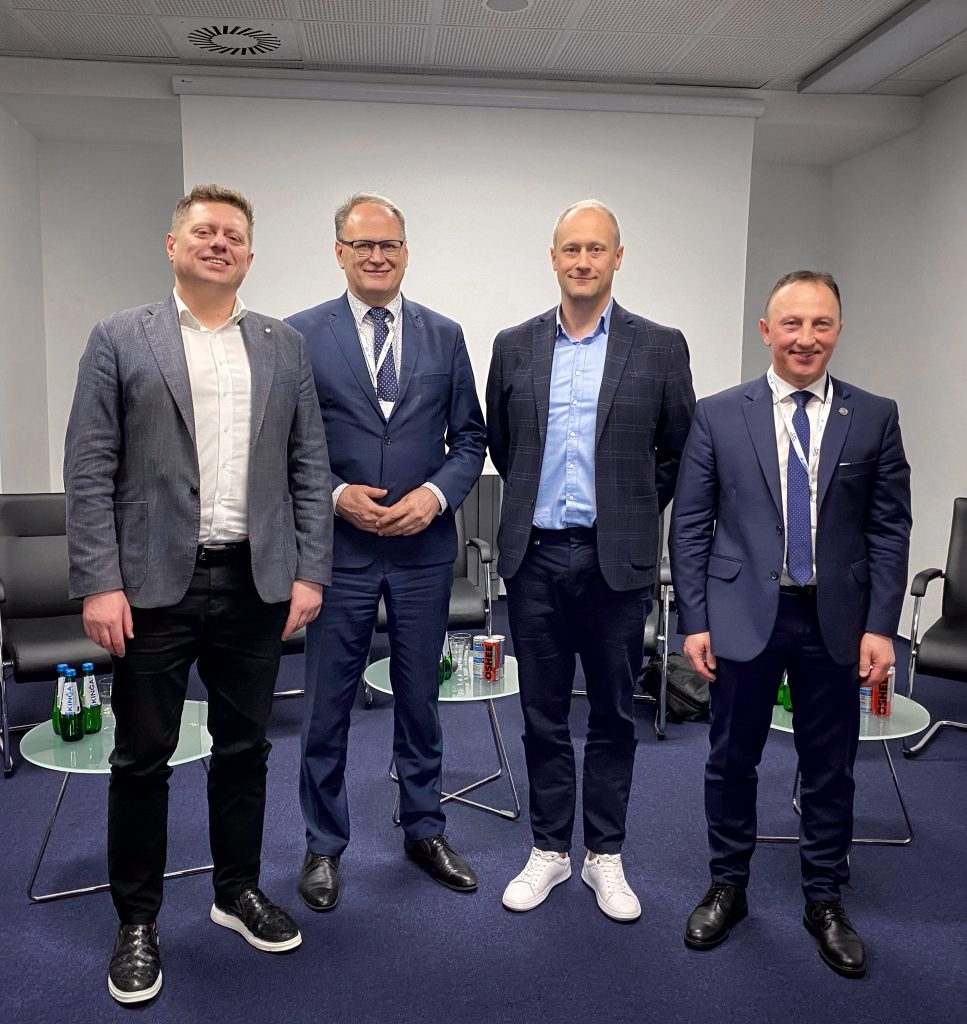
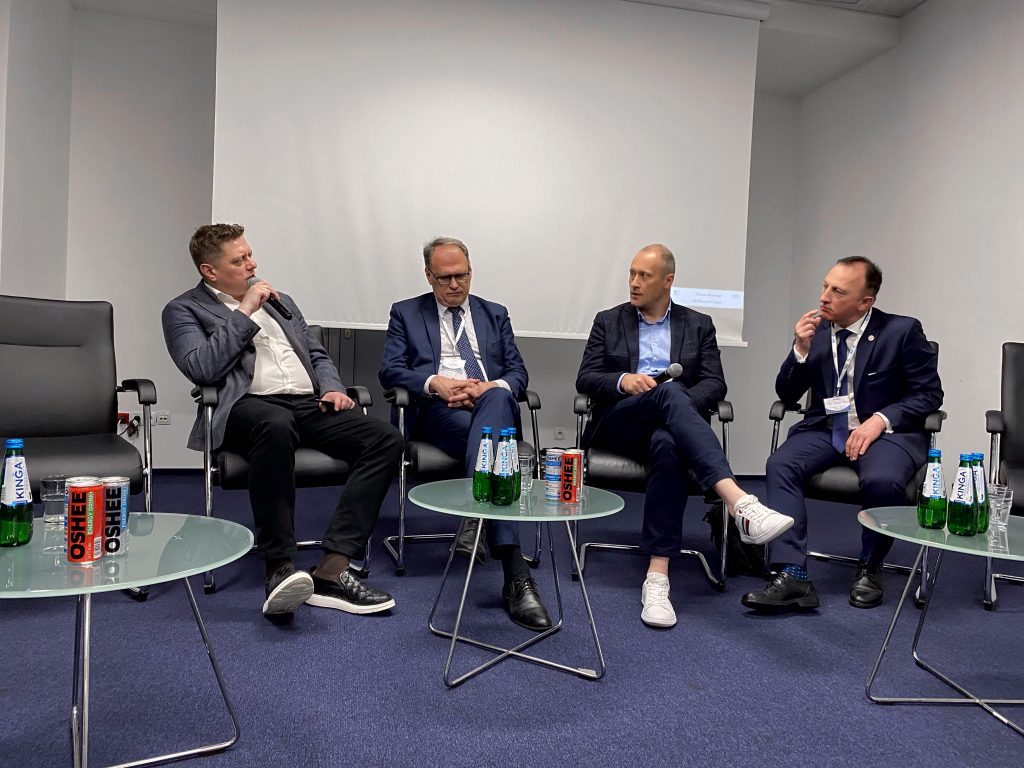
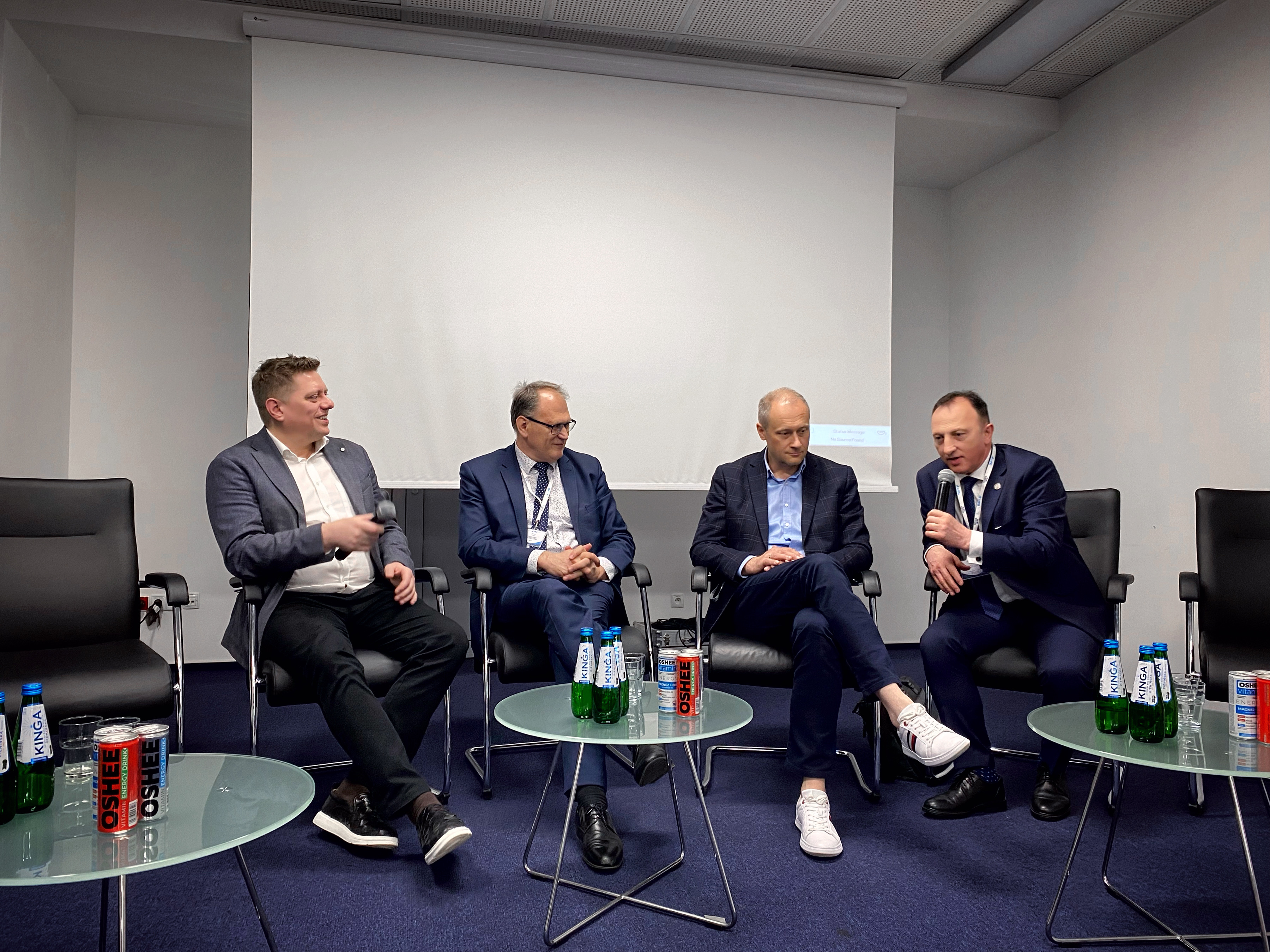
At the 10th International Economic Forum in Katowice, Roman Matys discussed the role of regional development strategy and its impact on the economy with the Mayor of Radomsko, Jarosław Ferenc, the Mayor of Pobiedziska, Ireneusz Antkowiak, and Paweł Borys, business development manager at the German company Trilux.
On the whole, each side kept its starting position. Local government representatives see a strategy as an important tool for planning territorial development. But in response to Roman Matys’s follow-up questions, both mayors admitted they meant only strategies built on business principles, not declarative documents written out of habit.
A strategy needs a clear goal and objectives, has to rest on real capabilities, resources and strengths, and has to account for possible risks and threats. Pobiedziska’s environmentally focused strategy, for example, led the municipality to turn down several investors. This concerned not only projects that threatened the environment but also, for instance, a solar farm. Residents opposed it because they had chosen to live there for the nature and the views from the windows of their new homes, and did not want to swap the landscape for fields of shiny panels. The strategy did its job: it attracted people who value exactly this and gave investors clarity about which projects are possible there.
Radomsko, by contrast, bet on an industrial zone: it consolidated land plots and brought all utilities to the site. This not only defined the zone, its capabilities and advantages clearly, but also greatly sped up the arrival of almost thirty investors and the creation of five thousand jobs.
Trilux confirmed that when choosing a location, business follows its own development strategy: logistics distances, proximity to promising markets, availability of workers and so on. It proved this in practice by deciding to build a new plant in Świdnik near Lublin, partly with an eye on the potential of the Ukrainian market. Of course, connected utilities, ready road access and no conflict with local residents also play a part in such decisions.
So a territorial development strategy is needed, but it must reflect the real needs of both business and residents, which makes creating one painstaking and slow. The standard bureaucratic documents that generations of officials are used to producing do not deliver development that is both dynamic for investment and focused on people’s needs. Let us hope that Ukraine’s reconstruction plans will take into account not only business’s wish to rebuild everything at once, but also the interests of residents, for whom comfort and safety will come first.