



First the pandemic, then the war in Ukraine: municipalities, cities, regions and states face a growing list of problems they have to deal with. The challenges include not only disagreements between central and local government and the budget issues that follow, but also the broader problem of choosing and delivering investment in hard times. There is no shortage of options: green cities, smart investment in urban infrastructure, teaching people to use new technologies, supporting the green transition. But where do you find savings, and what do you spend them on?
At the 32nd Economic Forum in Karpacz, I looked for answers to these questions together with the Mayor of Lublin, Robert Raczyński, the Chairman of Kraków City Council, Rafał Komarewicz, Lidl Polska board member Janusz Włodarczyk, and Paweł Grzyb, head of SAS Polska, which builds software for a sustainable economy. The discussion was moderated by Paweł Czuryło, founder of SNAP Media.
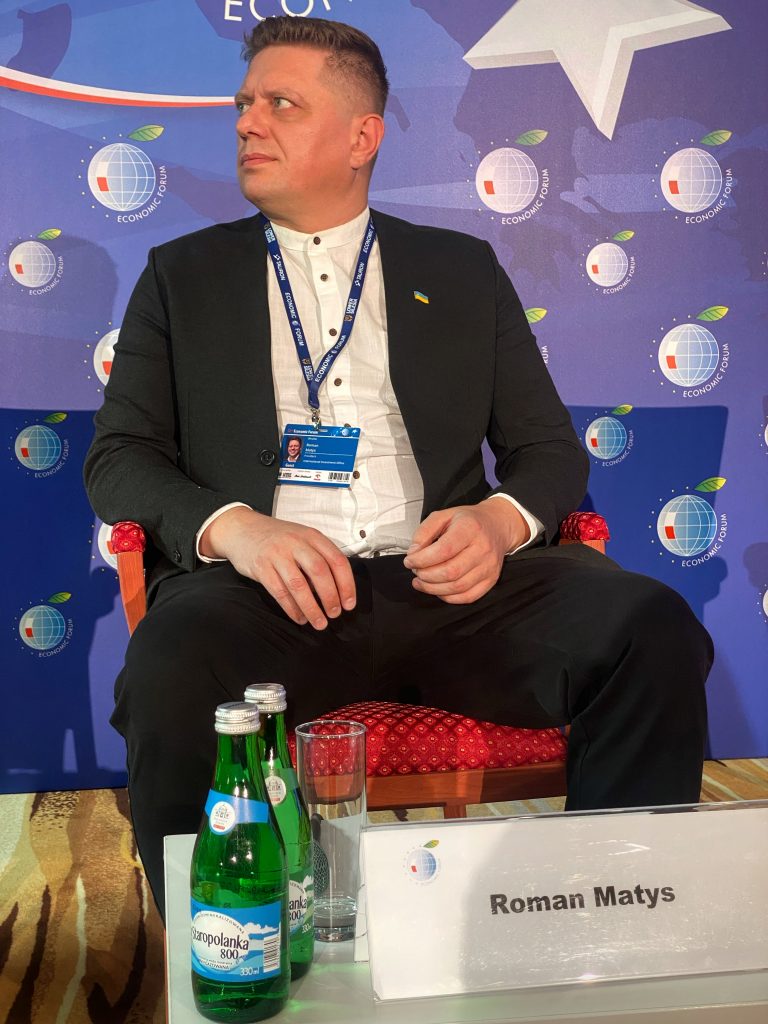
In Ukraine these questions have of course taken a back seat because of the war, but that does not mean we should stop planning for life after victory over Russia. Right now it is right to direct as much money as possible to the army, and that is not up for debate. My task, however, was to focus on how cities can develop sustainably in peacetime, and to name solutions that the rest of the world can use now and Ukraine can use later.
I believe the main focus of local government should be territorial master plans. Without them, all grassroots initiatives, however modern and effective, remain ad hoc patches for small and medium problems, and nobody understands how such decisions affect the bigger picture. Efforts to organise data, encourage public transport, develop micromobility or improve energy efficiency are very often carried out without any link to overarching strategic goals. As a result their effectiveness is questionable: they change residents’ behaviour, but they also create new problems that did not exist before.
Here is an example. Micromobility was supposed to ease congestion in big cities, but in practice it led to more road accidents involving new road users. So some cities around the world banned e-scooters or bicycles. The problem is not that these vehicles fail to solve the mobility issue, but that cities lack the infrastructure for their safe use, and residents lack the knowledge and rules they need.
That is why local governments should, step by step and area by area, develop master plans for their territory, and only then look for investment in specific projects. I am convinced that with a clear strategy and a step-by-step plan, investors will come forward with concrete solutions on their own. And municipalities will find it far easier to justify budget funding, both to central government and to residents, if they can show how each project leads to a shared goal.